Author’s Note: The reflections in this article are based on essays contained in my new book, Praying with Sacred Art: Pondering the Mystery of Redemption Through Visio Divina, now available from Sophia Institute Press. My sincere hope is that the book aids readers in encountering Our Lord as the liturgical year unfolds.
 God speaks to human beings through beauty. That is, Our Lord uses sensible realities to reach the human psyche, to touch our souls and captivate our hearts. Relying on the classical definition of beauty, made clearest in the thought of St. Thomas Aquinas, a thing is beautiful if it coheres and will not fall apart; if it is balanced and fits well together; if it shines forth a proverbial light that transcends itself. Beautiful things include sunsets, gardens, waterfalls, Gothic architecture, libraries, diligent scientific experiments, and the human person rightly understood, all of which can open a deeper conversation with the divine.
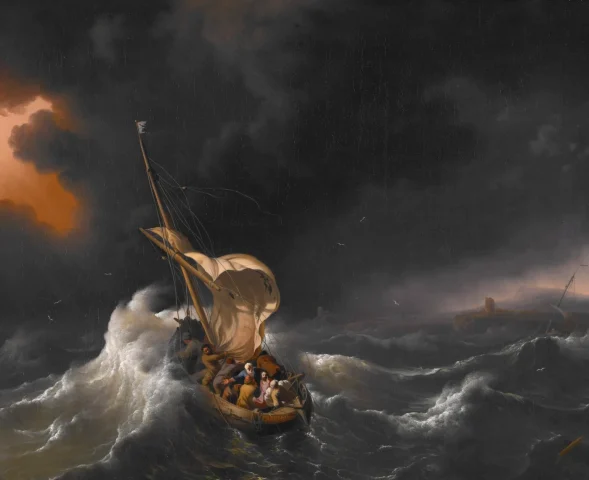
Art is another reality that can be—and often is—beautiful. Our Catholic Faith tells us that art is a “distinctly human form of expression,” produced from the “superabundance of the human being’s inner riches,” which are gifts from the Creator. Art arises from God-given talent and skill, and it seeks to provide access to a loftier reality “in a language accessible to sight or hearing” (CCC 2501). In a unique and powerful way, artistic effort gives humans the capacity to express their relationship with the creative and providential God. Following that, the same efforts allow hearers and viewers to enter a conversation with God. This is particularly what visio divina—the process of praying with sacred art—facilitates for those who gaze on paintings, sculptures, or other forms of visual art. …