
The Crisis, the Conscience, and the Consecrations, by Kennedy Hall

Todays Saints: Sts. Jacinta and Francisco Marto (Feb . 20, 2026)
February 20, 2026
SSPX Defies Vatican Warning, Confirms July 1 Episcopal Ordinations, by Diane Motagna
February 20, 2026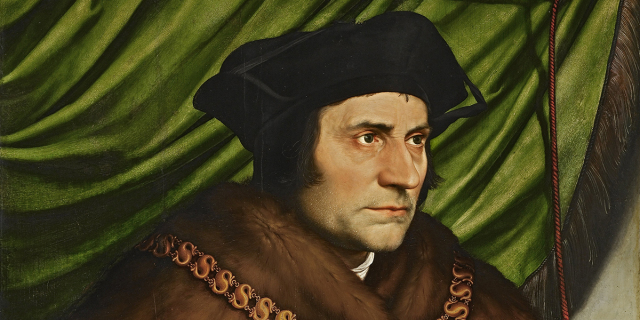
St. Thomas More. Public Domain
By Kennedy Hall, Crisis Magazine, Feb. 20, 2026
Kennedy Hall is the author of multiple best-selling books. He is a freelance author, audiobook narrator and host of the podcast Mere Tradition with Kennedy Hall. He is married with six children and lives in Ontario, Canada. He can be contacted through, and his work can be found at www.kennedyhall.ca.
Much like St. Thomas More’s refusal to swear an oath to a legitimate authority, today’s Church crisis likewise calls for fidelity to the Faith when faced with conflicting human laws.
 Not long before he was martyred, St. Thomas More wrote a series of letters to his daughters. In those letters, which have been compiled into a work called A Dialogue on Conscience, we find his daughter Margaret attempting to persuade him to swear the oath that would save his life, which he did not do, of course. We also find More’s insistence on the primacy of the conscience and why it would be impossible for him to swear the oath.
Related posts
February 20, 2026