
Fr. Nicola Bux: Building Peace Without Christ (Impossible)

Fr. Joseph Gill: The Novus Ordo and the Interior Life
April 20, 2026
Fr. Ed Broom, OMV: 10 Weeks to Spiritual Advancement with St. Ignatius
April 20, 2026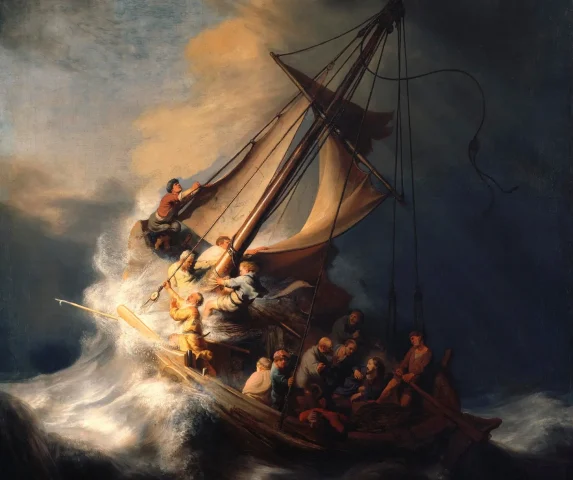
Christ in the Storm on the Sea of Galilee by Rembrandt (1606–1669) (Wikimedia Commons).
By Father Nicola Bux, Edward Pentin’s Substack, Apr 18, 2026
Father Nicola Bux on what Donald Trump has not understood and what Pope Leo has yet to say regarding the Church’s role in peace.
Here below is a guest commentary by Father Nicola Bux, a priest of the Italian Archdiocese of Bari, a professor of theology, and a former consulter to the Dicastery for the Doctrine of the Faith:
“Christ did not waste time criticising the Roman Empire, but founded the Church” — T.S. Eliot, Choruses from The Rock
Popes from John XXIII to Leo XIV have, in different ways, separated the question of peace from the concrete reality of the Church; as a result, their appeals for peace risk becoming utopian — aspirations that lack the means necessary for their fulfilment.
This separation appears when peace is framed primarily as a political or humanitarian goal: ending wars, encouraging dialogue, and fostering cooperation among nations. These aims are good, but when they are presented without reference to the Church’s essential mission — the conversion of persons and peoples to Christ — they lose their foundation. Peace becomes an external arrangement rather than the fruit of an interior transformation. …
Continue reading >>>>>>>>>>>>
Related posts
April 20, 2026
April 20, 2026
April 20, 2026