
The Saint Who Made Peace With Revolutionaries, Pennilessness, and His Mother, by Dawn Beutner

The Moral and Political Wisdom of C.S. Lewis, by Daniel J. Mahoney
May 21, 2026
An Interview: The Pope and the President, by Nathan Pinkoski
May 21, 2026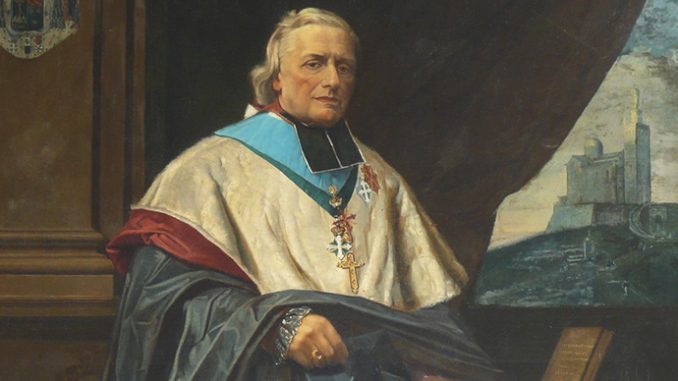
A painting of St. Eugène de Mazenod in the axial apse chapel of La Major Cathedral, in Marseille, Francs, where his tomb is located. (Image: Finoskov / Wikipedia)
By Dawn Beutner, Catholic World Report, May 21, 2026
Dawn Beutner is the editor of a new book All Things Are Possible: The Selected Writings of Mother Cabrini (Ignatius Press, 2025). She is also the author of The Leaven of the Saints: Bringing Christ into a Fallen World (Ignatius Press, 2023), and Saints: Becoming an Image of Christ Every Day of the Year also from Ignatius Press. She blogs at dawnbeutner.com and has been active in various pro-life ministries for more than thirty years.
Bringing the Good News of Christ’s love to everyone was exactly how Eugene de Mazenod wanted to spend his priestly life.
 When he died on May 21, 1861, Charles-Eugène de Mazenod was mourned by French Catholics as a steadfast bishop, a zealous religious founder, and a humble and inspirational preacher. A century later, Pope Saint John Paul II named him a saint.
Related posts

May 21, 2026
May 21, 2026



May 21, 2026