Editor’s Note: This is the twelfth in a series of articles on St. Augustine, one of the greatest of Church Fathers, and how his writings still apply today.

Cicero and Augustine, by Regis Martin

Is Vivek Right About America? by Colin Redemer
January 4, 2025
Saint of the Day for January 4: St. Elizabeth Ann Seton (Aug. 28, 1774 – Jan. 4, 1821)
January 4, 2025
By Regis Martin, Crisis Magazine, Jan. 4, 2025
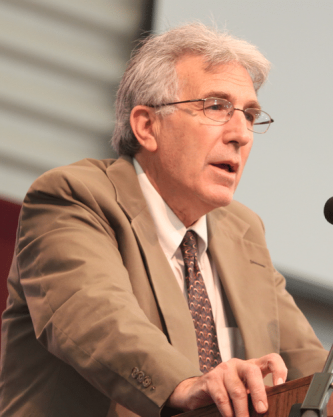
Regis Martin is Professor of Theology and Faculty Associate with the Veritas Center for Ethics in Public Life at the Franciscan University of Steubenville. …
What will God, whose chief instrument is often irony, choose as His weapon to pull Augustine back from the brink? A book by Cicero.
 Eliot’s allusion, among countless others strewn about the pages of the single most consequential poem of the last century—so many “fragments,” he called them, “shored against my ruins”—recalls the famous opening line from Book III of the Confessions, where a youthful Augustine, having come at last to Carthage, finds himself “in the midst of a hissing cauldron of lust.” He is not yet in love, he tells us, but nevertheless finds himself “in love with the idea of being in love.” But finding no object with which to slake so imperious a need, he is reduced to a kind of howling frustration that will not go away. And a self-loathing that only sharpens the torture.
Related posts

January 14, 2026
January 14, 2026


Main building at the University of Notre Dame. October 2015. Author Eccekevin. ... I, the copyright holder of this work, hereby publish it under the following license: w:en:Creative Commons. attribution share alike This file is licensed under the Creative Commons Attribution-Share Alike 4.0 International license. ...
January 14, 2026