

Concupiscence: How God Uses It to Make Us Holy, by Nate Guyear

Bellarmine Forum: The Twelve Promises — Lessons on the Sacred Heart
June 16, 2026
Fr. Jerry Pokorsky: Sacramental Masculinity Rediscovered
June 17, 2026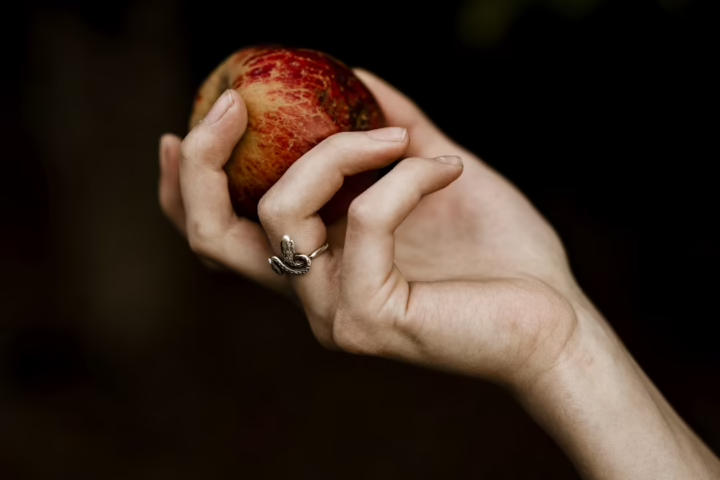
Photo by Andy Bodemer on Unsplash. Apple, girls hand
By Nate Guyear, Catholic Exchange, June 17, 2026
Nate Guyear returned to the Catholic Church in 2012, and immediately gravitated toward apologetics. He completed his MA in Theology at Holy Apostles College and Seminary and a Post MA Certificate in Moral Theology at Christendom College. …
 Concupiscence is a word with which most Catholics are generally familiar. However, this word carries some nuances that we should know because a better understanding can benefit us spiritually. Through this understanding, we will see how God uses it to increase our holiness.
Etymology of Concupiscence
The word concupiscence comes from the Latin word concupiscentia. The etymological breakdown follows: Con means intensely. Cupere means to desire. The inchoative suffix –isc denotes coming into existence. And the suffix –entia, which means a state or quality, turns a verb into an abstract noun. It is similar to putting –ence at the end of an English verb like abstain to make it the noun abstinence. See Catechism paragraph 2515. ….
Continue reading >>>>>>>>>>
Related posts

June 18, 2026

June 18, 2026




June 18, 2026