Notice: Function _load_textdomain_just_in_time was called incorrectly. Translation loading for the health-check domain was triggered too early. This is usually an indicator for some code in the plugin or theme running too early. Translations should be loaded at the init action or later. Please see Debugging in WordPress for more information. (This message was added in version 6.7.0.) in /nas/content/live/brownpelican/wp-includes/functions.php on line 6121

Notice: Function _load_textdomain_just_in_time was called incorrectly. Translation loading for the mfn-opts domain was triggered too early. This is usually an indicator for some code in the plugin or theme running too early. Translations should be loaded at the init action or later. Please see Debugging in WordPress for more information. (This message was added in version 6.7.0.) in /nas/content/live/brownpelican/wp-includes/functions.php on line 6121
Don’t Be Fooled: Notre Dame’s About-Face Isn’t a Return to Faith, by John Mac Ghlionn – Brown Pelican Society of Lousiana

Don’t Be Fooled: Notre Dame’s About-Face Isn’t a Return to Faith, by John Mac Ghlionn

Christ is King: A Truth, Not a Taunt, by Peter Wolfgang
November 25, 2025
Planned Parenthood Closes Another Abortion Center, 44 Total in 2025, by Steven Ertelt
November 25, 2025
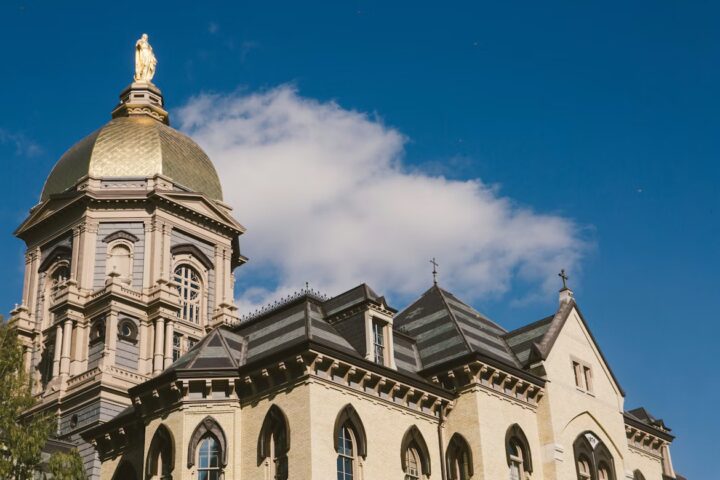
Mid shot of the Statue of Mary and the Golden Dome on top of Notre Dame University Administration Building with clouds in the sky behind the building. By Steven Van Elk. Unsplash

By John Mac Ghlionn, Crisis Magazine, Nov. 25, 2025

John Mac Ghlionn is a researcher and essayist. A contributor to Newsweek, he covers psychology and social relations. Follow him on X, @ghlionn.

The school’s Catholic heritage is being hijacked by a godless agenda.

In 1842, when Fr. Edward Sorin stepped onto the cold Indiana prairie, he set out to build a Catholic university that would shape saints, sharpen minds, and send out citizens anchored in faith. The place was small, the winters brutal, and the resources thin. But Sorin insisted that Notre Dame would shine as a “powerful means for good,” a clear expression of Catholic identity in a country that often misunderstood the Church.

For generations, that promise held. Parents sent their children there expecting more than lectures and degrees. They expected a formation, a moral compass, and an encounter with something higher than ambition. …

Continue reading >>>>>>>>