

Easter: April 17th: Today’s Saint: St. Robert of Molesme, Abbot (RM)

Easter: A Chance for Re-Engagement With the Risen Christ, by Dr. Jeff Mirus
April 17, 2026
Biden Prosecutors Knowingly Withheld Evidence When Targeting Pro-Life Americans, by Craig Bannister
April 17, 2026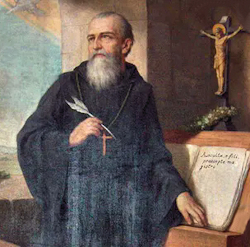
By Catholic Culture, April 17, 2026
St. Robert of Molesme
St. Robert was born in 1027 near Troyes, Champagne, France, of noble birth. At age 17 he entered the Benedictine Abbey Montier-la-Celle, quickly rising to be prior of the abbey. He was made Abbot of Saint-Michel-de-Tonnerre in 1070, but considered it to have lax standards and the monks were quarrelsome, so he returned to Montiers-la-Celle. The same year he was placed over the priory Prior of Saint-Ayeul Abbey, which was connected to Montiers-la-Celle.
In 1075, in an attempt to return to a simpler form of Benedictine life requested by a group of hermits from the forests around Colan, France, he helped found the monastery at Molesme, Burgundy. The group, especially Robert, gained a reputation for piety. It is because of this reputation that in 1082 St. Bruno of Cologne came to Robert seeking advice. He lived with Robert’s community for a time before going on to found the Grande Chartreuse, the first Carthusian monastery. , The growing reputation led to bequests of money, which led to an increase in size of the monastery, which led to internal difficulties, and suddenly there were many brothers that objected to the severe life practiced by the founders. Robert twice left to live on his own, but was ordered back to his position by the pope.
In early 1098 Robert, Saint Stephen Harding, Saint Alberic of Citeaux and 18 other monks left Molesme, and on March 21, they founded the monastery of Cîteaux near Dijon, France, with the goal of living strictly by the Benedictine Rule, strict vows of poverty, and frequent retreats; Robert served as the first abbot. However, with conditions deteriorating at the Molesme house he was re-assigned as abbot there in 1100 with a mandate to reform. The monks agreed to submit entirely to his interpretation of the Rule of St. Benedict. Molesme became a major center for the Benedictines under his tutelage. St. Albéric was made successor abbot at Cîteaux, with St. Stephen Harding as prior. St. Robert lived and worked in Molesme the rest of his life.
St. Robert is traditionally considered one of the founders of the Cistercians, the reform that developed at Citeaux.
—Adapted from Catholic Saints Info and Catholic Encyclopedia
Continue reading >>>>>>>>>>
Related posts


May 11, 2026


May 11, 2026