
Notice: Function _load_textdomain_just_in_time was called incorrectly. Translation loading for the health-check domain was triggered too early. This is usually an indicator for some code in the plugin or theme running too early. Translations should be loaded at the init action or later. Please see Debugging in WordPress for more information. (This message was added in version 6.7.0.) in /nas/content/live/brownpelican/wp-includes/functions.php on line 6131

Notice: Function _load_textdomain_just_in_time was called incorrectly. Translation loading for the mfn-opts domain was triggered too early. This is usually an indicator for some code in the plugin or theme running too early. Translations should be loaded at the init action or later. Please see Debugging in WordPress for more information. (This message was added in version 6.7.0.) in /nas/content/live/brownpelican/wp-includes/functions.php on line 6131
Giotto’s Lamentation and the Face of Christ: Renaissance Humanism in Catholic Perspective, – Brown Pelican Society of Lousiana

Giotto’s Lamentation and the Face of Christ: Renaissance Humanism in Catholic Perspective,

OPINION: Vatican II’s Religion of Man on Full Display in Leo’s AI Encyclical, by Riaan Van Zyl
May 26, 2026
Fr. Paul D. Scalia: Heartburn and Broken Ribs
May 26, 2026
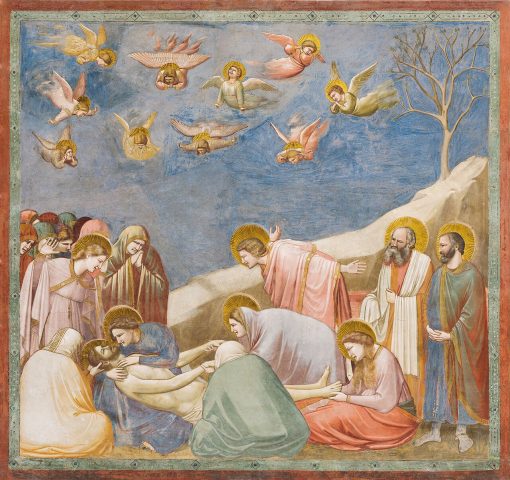
Giotto (1266–1337). Title: "Lamentation of Christ". Image from Wikimedia Commons

By Mario Smith, Catholic Exchange, May 26, 2026

Mario Smith is a native Houstonian and a product of the area’s parochial schools and Jesuit high school. He holds a BS from Texas A&M, an MA from Webster University in St. Louis, and an MBA from the University of Houston–Clear Lake. When he’s not writing, he pilots a Boeing 737 for one of the nation’s largest airlines. He lives in Pearland, Texas, with his wife. They have three adult children.

 

Mario Smith headshotThe Catholic view on Renaissance humanism has generally been positive, understanding it as an important cultural and intellectual movement that enriched Christian civilization. It especially views its 13th- through 15th-century forms as compatible with faith, where most of its works were grounded in the dignity of the human person created in God’s image (imago Dei). It celebrated human potential, classical learning, the beauty of nature, and realism in art—all of which could strengthen one’s appreciation of God’s creation.

Many Catholic figures played a key role in it: St. Francis of Assisi praised nature in his Canticle of Brother Sun (1224–1225); St. Thomas Aquinas integrated ancient philosophy with Catholic doctrine; and popes patronized grand projects by humanist artists. Works like Giotto’s Lamentation advanced art and remained profoundly Christian as well. ….