“The sculptor arrives at his end by taking away what is superfluous.”
– Michelangelo to Benedetto Varchi, 1549

Holy Work: Michelangelo’s ‘Pietà’, by Brad Miner

50,000 Troops Now Stationed in Middle East, by Sam Barron
March 30, 2026
Patriarch Barred from Holy Sepulchre on Palm Sunday in Jerusalem, by Kelsey Reinhardt
March 30, 2026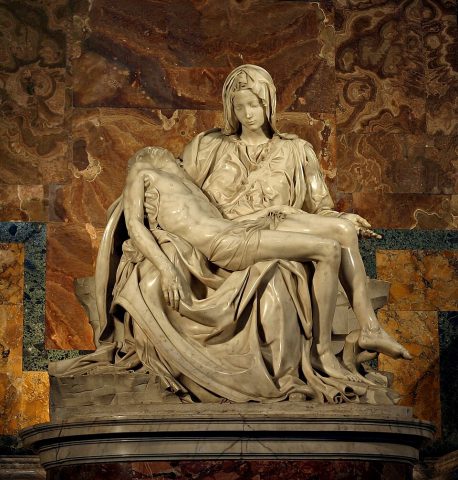
Pietà (1498–1499), by Michaelangelo. St. Peter's Basilica, Vatican City. ... This file is licensed under the Creative Commons Attribution-Share Alike 3.0 Unported license. ... You are free: to share – to copy, distribute and transmit the work ...
By Brad Miner, The Catholic Thing, March 30, 2026
Brad Miner, husband and father, is Senior Editor of The Catholic Thing and a Senior Fellow of the Faith & Reason Institute. He is a former Literary Editor of National Review, and had a long career in the book publishing industry. His most recent book is, Sons of St. Patrick, written with George J. Marlin. …
 The greatest artist of the Renaissance is famous for something he may never have said: “I saw the angel in the marble and carved until I set him free.” There are other versions of the quotation, as in the epigraph above, that are genuine, and they may seem to suggest that Michelangelo believed he merely liberated a form trapped in stone.
Related posts
March 30, 2026
March 30, 2026
March 30, 2026