
Kath.net: Is a Schism in the Air? A Conversation Between Cdl. Gerhard Ludwig Müller & Lothar C. Rilinger

Texas Children’s Hospital to Create Nation’s First Clinic for Detransitioners, by Elise Winland
May 28, 2026
Pro-Life Academy Calls for Withdrawal of Synod Report on Same-Sex Relations, by Edward Pentin
May 28, 2026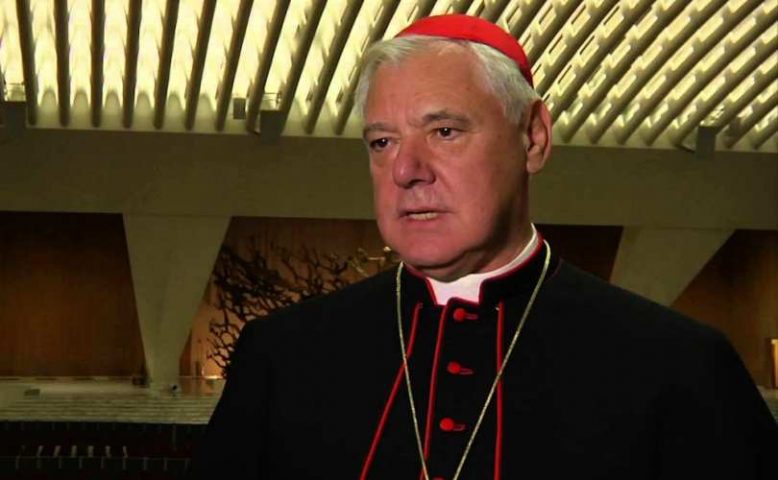
(ENG) Interview with Cardinal Gerhard Muller. Salt + Light Media. Oct 8, 2014. Day 3: From inside the Extraordinary Synod on the Family, Salt and Light TV spoke to Cardinal Gerhard Muller, Prefect of the Congregation for the Doctrine of the Faith
By Kath.net, May 27, 2026
The tragic theological conflict between the Church and the Society of St. Pius X. A conversation between Cardinal Gerhard Ludwig Müller and Lothar C. Rilinger
Vatican City (kath.net) The decrees of the Second Vatican Council were not accepted by all Catholics. Some were content with critical statements, but Bishop Marcel Lefebvre, who also served as Archbishop of Dakar, rejected even key reforms initiated by the Council, including the declaration Nostra aetate – the declaration that regulates the new relationship between the Church and the Jews. Furthermore, he rejected the 1965 liturgical reforms as well as the ecumenical movement. His strict rejection met with fierce resistance within the Church. To institutionalize his conservative stance, he founded the Society of St. Pius X in 1970. Through the mediation of the then Prefect of the Congregation for the Doctrine of the Faith, Cardinal Joseph Ratzinger, a compromise was reached, but in 1988 Lefebvre consecrated four bishops, an act considered schismatic by the Church and resulting in his excommunication. Benedict XVI lifted this ecclesiastical penalty through grace while upholding canonical and theological views.
Not only has Bishop Lefebvre died, but also two of the bishops he consecrated. The two remaining bishops are quite old, so there is a risk that their deaths will leave no bishop to ordain priests, which would lead to the extinction of the priesthood of the Society of St. Pius X. To prevent this, new bishops are to be consecrated on July 1, 2026. This plan is meeting with resistance within the Church. We spoke about this resistance with Cardinal Gerhard Ludwig Müller, the former Prefect of the Congregation for the Doctrine of the Faith. …
Continue reading >>>>>>>>>>>>>>
Related posts
May 28, 2026

May 28, 2026

May 28, 2026