
Leo XIV Contra Leo XIII, Michael Pakaluk

Founder’s Quote
October 23, 2025
Saint of the Day for October 24: St. Anthony Mary Claret
October 24, 2025
Two Seated Lions by Albrecht Dürer, 1521 [Kupferstichkabinett, Berlin]
By Michael Pakaluk, The Catholic Thing, October 23, 2025
Michael Pakaluk, an Aristotle scholar and Ordinarius of the Pontifical Academy of St. Thomas Aquinas, is Professor of Political Economy in the Busch School of Business at the Catholic University of America. …
 Pope Leo XIV took his name to signal his closeness to Leo XIII, and yet in his recent Apostolic Exhortation, Dilexi te, his statements sometimes seem at odds with his predecessor: on the root of social evils, the remediation of poverty, and private property.
Related posts

March 6, 2026
March 6, 2026
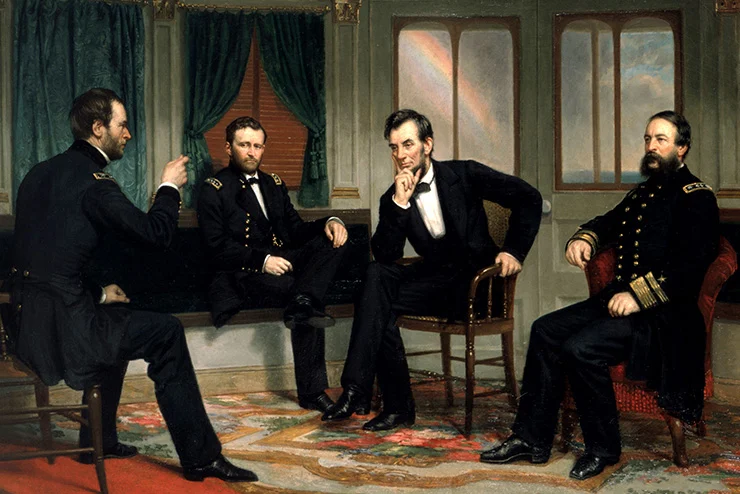

“The Peacemakers” (1868) by George Peter Alexander Healy, depicting a Union military strategy meeting in 1865. From left to right: Major General William Tecumseh Sherman; U.S. Army Commanding General Ulysses S. Grant; President Abraham Lincoln; and Rear Admiral David Dixon Porter (The White House Historical Association)
March 6, 2026