
Recovering the Origins of Catholic Social Teaching, Part One, by Matthew Walz

‘Something’s Happening’: Catholic Converts Surge in Many U.S. Dioceses, by Matthew McDonald
March 30, 2026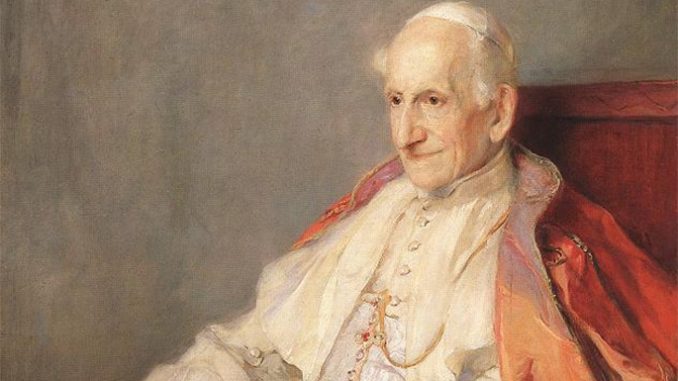
Detail of a portrait of Pope Leo XIII, painted by Philip de László in 1900. (Image: Wikipedia)
By Matthew Walz, Catholic World Report, March 29, 2026
Matthew Walz will begin serving as President of Thomas More College this September (2026). He is currently an Associate Professor of Philosophy and Director of the Philosophy & Letters and Pre-Theology Programs at the University of Dallas. He also serves as Director of Intellectual Formation at Holy Trinity Seminary. His writings, which have appeared chiefly in various academic journals, focus chiefly on Aquinas, Augustine, Anselm, Boethius, and Wojtyla.
It was in Aeterni Patris, Pope Leo XIII’s first encyclical, not Rerum Novarum, that he initiated what would become his signature Catholic social teaching.
Editor’s note: The following piece is the first part of a two-part essay.
I
 In 1846, John Henry Newman traveled to Rome to see if he could arrange to undertake seminary studies for the Catholic priesthood. He had converted a year earlier, and now, at 45 years old, he wished to be ordained a Catholic priest. He was, as we say nowadays, a “late vocation”—but one like no other. He had already published several books: Arians of the Fourth Century, Parochial and Plain Sermons in eight volumes, and his Oxford University Sermons, which he regarded as the “best, not the most perfect” of his books. Moreover, he had just completed a draft of what would become one of his own and, indeed, the Church’s most innovative pieces of theology, An Essay on the Development of Christian Doctrine. Yes, this was no ordinary seminarian.
Newman brought to Rome a desire to study Thomas Aquinas. But after many inquiries, he found that Thomas was not being taught. Naturally, the new convert was asking serious questions about how he should prepare for the priesthood; he was asking, in particular, whether such preparation should include the study of Aristotle and Thomas. In a letter written from Rome to his friend John Dalgairns, a convert and recently ordained Catholic priest, Newman relates a conversation he had in Rome about this very thing.
He tells Fr. Dalgairns that their mutual friend James Hope, the wealthy railway attorney and future convert, had told him before he left England that “we should find very little theology here.” Then once Newman had arrived in the city, a Jesuit priest told him: “we shall find little philosophy.” In recounting his conversation with the Jesuit, Newman explained why theological and philosophical instruction had become so threadbare in the Eternal City. ….
Continue reading >>>>>>>>
Related posts
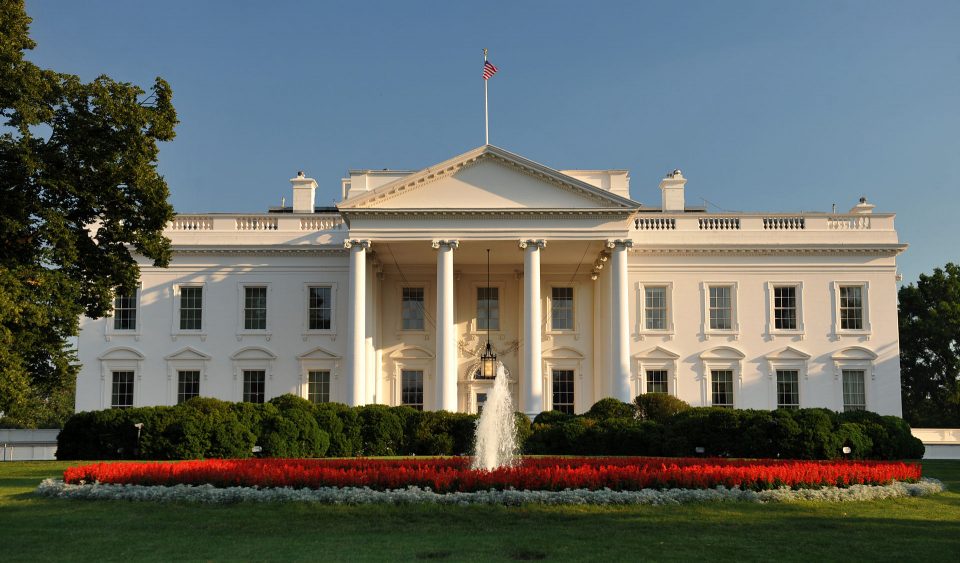
The White House, official residence of the president of the United States... This file is licensed under the Creative Commons Attribution-Share Alike 4.0 International, 3.0 Unported, 2.5 Generic, 2.0 Generic and 1.0 Generic license... You are free: to share – to copy, distribute and transmit the work ...