

Salesian Spirituality for Lent: Purified by God’s Grace & Personal Effort, by Derek Rotty

Why Pretzels Are Synonymous With Lent, by Alexandra Greeley
February 19, 2026
Meditating On Death Is Critical To A Good Life, by Casey Chalk
February 19, 2026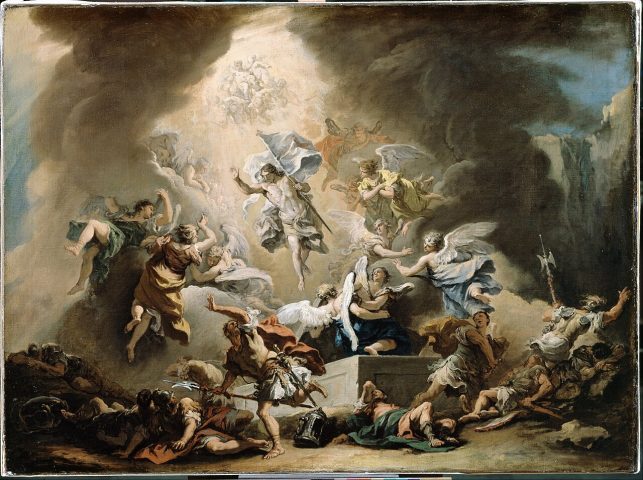
"The Resurrection", Ricci, Sebastiano (1659 - 1734) – Artist. Wikidata... This is a faithful photographic reproduction of a two-dimensional, public domain work of art.
By Derek Rotty, Catholic Exchange, Feb. 16. 2026
Derek Rotty is a husband, father, teacher, and free-lance writer who lives in Jackson, Tennessee. He has written extensively on Catholic history, culture, faith formation, and family. He recently published his book Prophet of Hope: Fulton Sheen Responds to the Modern World, available on Amazon. Find out more about him & his work at www.derekrotty.com.
Editor’s Note: This Lenten series aims to unpack De Sales’ rich spiritual wisdom, applying it to the penitential season and to our lives as disciples generally. Catch up on the rest of the series here!
Author’s Note: All quotes from Introduction to the Devout Life, by St. Francis de Sales, are taken from John K. Ryan’s translation, published in 1966 by Image/Doubleday (ISBN: 0-385-03009-6). References include the part and the section. For example, Part IV, Section 3 is cited as (IV.3).