
SSPX Consecrations: The State of Necessity in 2026, by Kennedy Hall

Fr. Gerald E. Murray: SSPX: Schism and Excommunication
July 2, 2026
Fr. Mike Johns: Immigration and the Declaration at 250
July 2, 2026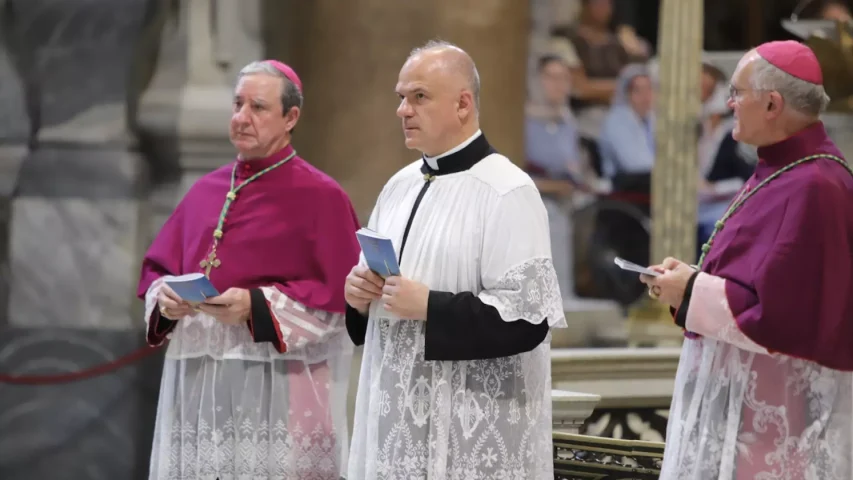
Source: FSSPX News, June 30, 2026. Rome_website_gallery
By Kennedy Hall, Complicit Clergy, July 1, 2026
The principal contention of those sympathetic to the SSPX, but in disagreement with the consecrations of bishops in 2026, is as follows: While in 1988 it could have been argued that a state of necessity for the survival of Catholic Tradition existed, this is not the case today because the Traditional Latin Mass is more accessible, even after Traditionis Custodes, when compared to 1988; and, men who wish to become Traditional Priests do not have to join the SSPX because of the FSSP, and other such groups.
I am paraphrasing the argument, but this is the general gist. Father Gerald Murray, a man I have never met personally, but for whom I have great respect, has made this claim on numerous occasions in interviews. In addition, in my conversations with other Traditionalists, or SSPX sympathizers, who do not share the SSPX’s view that extraordinary consecrations are legitimate in 2026, I have found this sort of line of thinking to be common.
The argument goes further as well, and can be summarized with the following points:
-
In 2026, there are more Bishops, Priests, and laymen devoted to the Traditional Rite than there were in 1988
-
In 2026, there are even Cardinals who celebrate the Old Rite, and there were essentially zero in 1988
-
The general fervour for Vatican II and its ambiguity and errors has largely collapsed, at least compared to the hysteria that enwrapped the Church in 1988
-
More people attend the Old Mass in 2026, and largely because of that, more Mass-attending Catholics are orthodox in belief than in 1988
-
What could be called “Papolatry” has, or is collapsing, and Catholics in general, especially after Pope Francis, are more willing to call foul on the shenanigans coming out of Rome
There are perhaps other points that could be addressed; however, I believe that these will suffice for the purpose of this essay, and, if there are other points, they are likely related to, if not practically identical to the aforementioned points in substance.
Ultimately, it boils down to the notion that, since the Traditional Liturgy is relatively widespread and gaining steam, despite suppression, the State of Necessity no longer exists as it did in 1988. It may be argued by those sympathetic to these points that we are in some way even close to a solution to the current problem, and that the SSPX consecrations may work against that solution being realized.
We will address these below; however, before doing so, it is necessary to lay some groundwork. If we are going to do our job well, we must define terms and ensure that we are thinking with the same definitions, principles, etc. In that spirit, I believe it is necessary to consider what a State of Necessity even is, and if that applies to the case of the SSPX and the consecration of bishops without papal mandate, and, even against the will of the Pope.
Before we continue, some commentators like to quibble about the difference between doing something without permission and doing things when permission is not only absent, but is strictly denied. The thinking goes: it is one thing to do something without permission, but it is worse to do something when you have been told not to.
This line of reasoning is contextual, and the context makes all the difference. A son may do something that he is not normally supposed to do without first asking his father, or he may ask his father, and then after he is told no, he may do it anyway. It could be argued that it is worse to do so without even asking, because he made absolutely no attempt to recognize his father’s authority, whereas, if he asked and his request was negated, it could be argued that he at least showed his principle subjection to his father’s rule. What would validate or invalidate his actions would be whether going against his father’s will, passively or actively, was warranted due to a necessity.
Continue reading at Kennedy Hall
SOURCE >>>>>>>>>>>>>>>
Related posts
July 2, 2026
July 2, 2026
July 2, 2026