

The ‘Bee Nun’ of Lebanon: Hidden Vocation of Sister Lea and Her 200 Million Bees

Becoming Who God Created via the Disciplines of Lent, by Suellen Brewster
March 10, 2026
SSPX Response to Dubia, by an SSPX Priest
March 10, 2026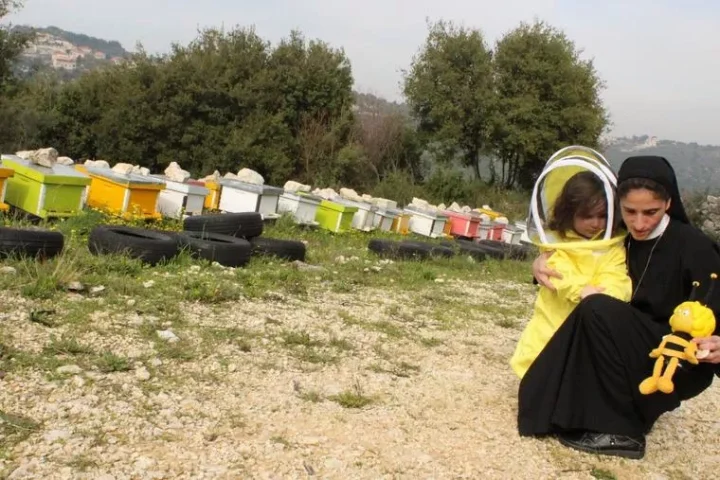
Sister Lea Lahoud uses her apiary as grounds for prayer. (photo: Courtesy photo / Sister Lea Lahoud)
By Anthony Di Mauro, National Catholic Register, March 9, 2026
Anthony Di Mauro Based in Spokane, Washington, Anthony Di Mauro is the founder and executive director of The Relic Project, a mission that aims to advance the relic renaissance by bringing the tradition of relics into the digital age. Through a comprehensive and accessible online database similar to St. Carlo Acutis and the Eucharistic Miracle database ….
‘My apiary is my outdoor chapel; every hive is a little sanctuary buzzing with grace.’
 Rooted in ancient Syriac prayer and forged through suffering, the Maronite Church continues to serve as a living bridge between East and West.
High in the mountains of Lebanon, where stone monasteries cling to hillsides and ancient prayers still echo in Syriac chant, Maronite Christianity continues to live as a quiet and powerful witness within the Catholic Church, even in these days of war and uncertainty. Deeply Eastern in spirituality, the Maronite Church is fully united with Rome, and the tradition carries a spirituality shaped by silence, endurance and fidelity.
At its heart stands Maronite saints — like St. Charbel Makhlouf, who was ordained a priest in 1859 and eventually lived as a hermit devoted to the Holy Eucharist; St. Nimutallah, a monk who died in 1858; and St. Rafqa, whose life was characterized by intense suffering and devotion and who was known as the “Flower of Lebanon” before her death in 1914; ….
Continue reading >>>>>>>>>
Related posts

March 10, 2026

March 10, 2026



March 10, 2026