Opinion: Leo’s Dancing Queen Pontificate, by Chris Jackson
May 8, 2026Founder’s Quote
May 8, 2026
By Richard K. Vedder, The American Spectator, May 8, 2026
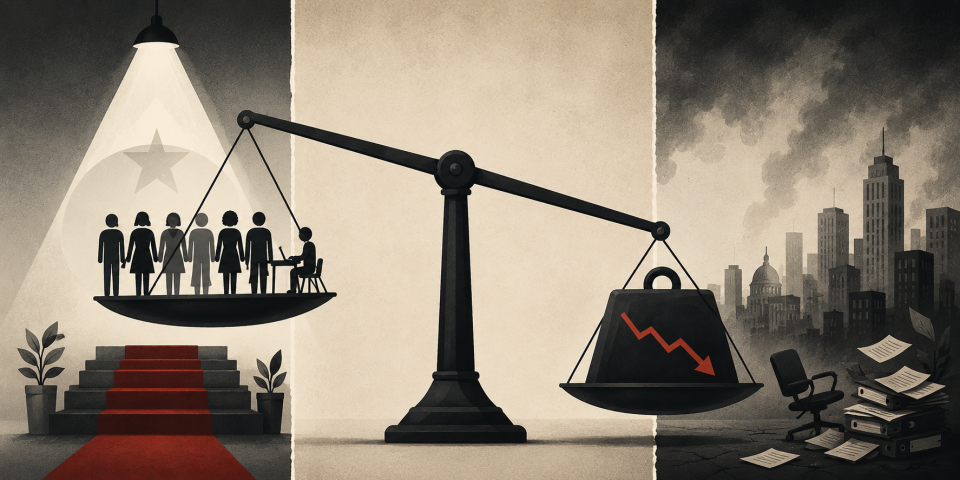
Buried within hundreds of pages of wonkiness in the new ‘Economic Report of the President’ is a dismal reckoning of the true cost of DEI.
Every year for more than three-quarters of a century, the federal government has issued a book-length report on the economy: The Economic Report of the President. Probably most readers use it mainly for the several dozen pages of appended statistical tables, but this is preceded by what the President’s Council of Economic Advisers has to say about the condition of the economy. Usually, those 300 or more pages of verbiage are of limited interest to even the most nerdy of followers of the state of economic affairs in America.
This year, my friend James Creigh suggested that I read the relatively short (10 pages) Chapter 10 of this year’s report on the “Economic Consequences of DEI.” Good advice: it was certainly provocative and even compelling reading. …