
The Solid Grounding of the American Republic, by Phil Lawler

Conservatives Can’t Beat Democrats Until They Defeat The RINOs In Their Own Party First, by Shawn Fleetwood
February 12, 2026
January Job Growth Shocks Analysts by More than Doubling Expectations, by Craig Bannister
February 12, 2026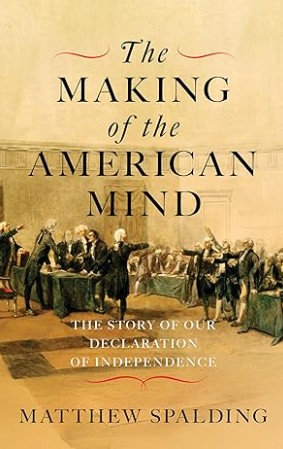
Screenshot. Book cover for "The Making of the American Mind: The Story of our Declaration of Independence" by Matthew Spalding (Author). December 9, 2025
By Phil Lawler, Catholic Culture, Feb 11, 2026
Phil Lawler has been a Catholic journalist for more than 30 years. He has edited several Catholic magazines and written eight books. Founder of Catholic World News, he is the news director and lead analyst at CatholicCulture.org. See full bio.
 Only a few pages into The Making of the American Mind, I paused in my reading and looked at the Index. The way Matthew Spalding introduced his subject (the book is subtitled “The Story of our Declaration of Independence”) gave me the sense that this would not be the standard boilerplate treatment, interpreting the Declaration as the thought of John Locke, filtered through the pen of Thomas Jefferson.
Oddly, when I looked under “Locke,” at first I saw no entry. It was there, of course; my eyes had somehow skipped over it. Spalding gives Locke plenty of attention. But my hunch was not entirely wrong. This book is, among other things, a largely successful effort to counteract the simplistic readings of our nation’s founding document. …
Related posts

February 12, 2026
February 12, 2026



February 12, 2026