

Saint of the Day for October 6: Saint Bruno (c. 1030 – October 6, 1101)

Recovering the real St. Francis of Assisi, David G. Bonagura, Jr.
October 4, 2025
Pope Leo Offers Another Jibe at Trump Over Deportations — Urges Catholics to Embrace Open Borders Under ‘New Missionary Age’, by Ben Kew
October 6, 2025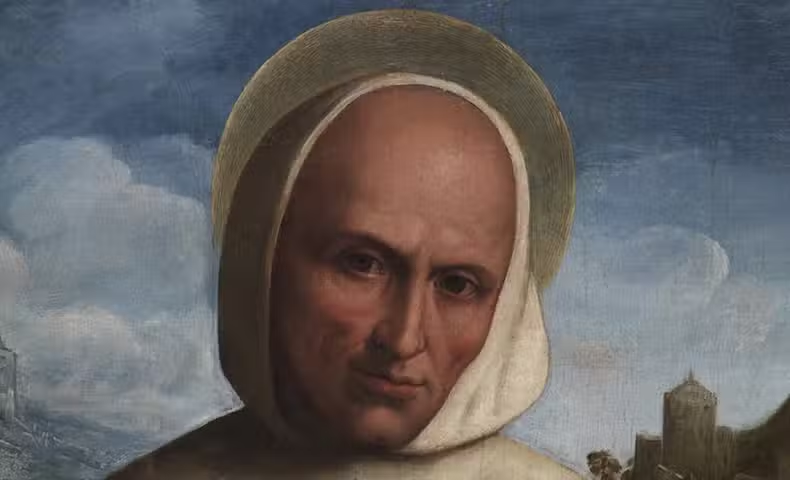
Image: Saint Bruno | Girolamo Marchesi
Franciscan Media, October 6
Saint Bruno’s Story
This saint has the honor of having founded a religious order which, as the saying goes, has never had to be reformed because it was never deformed. No doubt both the founder and the members would reject such high praise, but it is an indication of the saint’s intense love of a penitential life in solitude.
Saint Bruno was born in Cologne, Germany, became a famous teacher at Rheims, and was appointed chancellor of the archdiocese at the age of 45. He supported Pope Gregory VII in his fight against the decadence of the clergy, and took part in the removal of his own scandalous archbishop, Manasses. Saint Bruno suffered the plundering of his house for his pains.
He had a dream of living in solitude and prayer, and persuaded a few friends to join him in a hermitage. After a while he felt the place unsuitable and through a friend, was given some land which was to become famous for his foundation “in the Chartreuse”—from which comes the word Carthusians. The climate, desert, mountainous terrain, and inaccessibility guaranteed silence, poverty, and small numbers.
Saint Bruno and his friends built an oratory with small individual cells at a distance from each other. They met for Matins and Vespers each day and spent the rest of the time in solitude, eating together only on great feasts. Their chief work was copying manuscripts.
Hearing of Saint Bruno’s holiness, the pope called for his assistance in Rome. When the pope had to flee Rome, Bruno pulled up stakes again, and after refusing a bishopric, spent his last years in the wilderness of Calabria.
Saint Bruno was never formally canonized, because the Carthusians were averse to all occasions of publicity. However, Pope Clement X extended his feast to the whole Church in 1674.
Reflection
If there is always a certain uneasy questioning of the contemplative life, there is an even greater puzzlement about the extremely penitential combination of community and hermit life lived by the Carthusians. May we mirror Saint Bruno’s quest for holiness and unity with God.
https://www.franciscanmedia.org/saint-of-the-day/saint-bruno/
Related posts
attends a press conference at the North American College April 5, 2005 in Rome. The College of Cardinals met for a second day of talks Tuesday to prepare for the conclave that will elect a successor to Pope John Paul II, and tens of thousands of mourners streamed past the pontiff's crimson-robed body as it lay in state in St. Peter's Basilica.
January 22, 2026

January 22, 2026

