
Easter: April 13th: Monday of the Second Week of Easter; Opt Mem of St. Martin I, Pope and Martyr

Newsmax: CENTCOM: Hormuz Blockade to Begin Monday Morning
April 13, 2026
Trump Blasts Pope Leo as ‘Weak’ and ‘Terrible for Foreign Policy’
April 13, 2026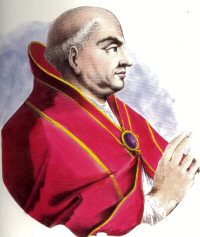
Catholic Culture, April 13, 2026
Monday of the Second Week of Easter; Opt Mem of St. Martin I, Pope and Martyr
St. Martin I
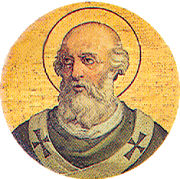 The unfortunate victim of Constans’ wrath was the virtuous Martin. Born in Todi of noble birth, he had served as nuncio to Constantinople under Pope Theodore, gaining experience in dealing with the Byzantine court and familiarizing himself with the Monothelite teachings so prevalent in the East. Without waiting for the necessary imperial mandate, Martin proceeded with his consecration on July 5, 649. This independent act so enraged the emperor that he refused to acknowledge Martin as the legitimate pope.
A staunch defender of the orthodox, Martin immediately convened a synod in the Lateran. Attended by 105 Western bishops, the synod studied all aspects of Monothelitism and the emperor’s Type. After nearly a month, the synod reached a conclusion. They determined that there were two wills in Christ, condemned the One Will heresy, and further condemned Constans’ Type for boldly prohibiting the truthful teachings of the apostles. In an effort to pacify the emperor, Martin acknowledged Constans’ good intentions in trying to unify the Church and placed the burden of responsibility on the poor advice of Constantinople’s patriarchs.
Constans, far from appeased, was determined that his religious policies would not be ignored. Appointing his chamberlain Olympius as exarch to Italy, he dispatched him with the order to obtain the signatures of acceptance from all Italians without exception. Olympius proved to be a dismal failure, both in his mission and in an attempted assassination of the popular pope. The exarch prudently abandoned his post and fled to Sicily to fight the invading Muslims.
In the summer of 653, the furious emperor appointed yet another exarch, Theodore Calliopas, with orders to escort the inflexible pontiff to Constantinople. Calliopas and his officers boldly entered the Lateran, arrested the bedridden Martin, and presented the clergy with Constans’ edict deposing the pope who had been consecrated illegally. The voyage, which took nearly three months, subjected the sickly pope to humiliation and abuse. Arriving in Constantinople, racked with dysentery and disabled by gout, Martin was placed in solitary confinement. On December 19, 653, Martin was brought to trial on trumped-up charges of treason and sacrilege. The pope, near death and realizing his position futile, could only laugh at the ridiculous accusations and beg the emperor to excuse the fumbling witnesses before they added perjury to false witness! Constans pronounced the predetermined verdict of guilty on the pontiff and sentenced him to public flogging and death. The disapproving crowd watched, horrified; and it was only by the dying Patriarch Paul’s intercession that Martin’s sentence of public execution was commuted to banishment.
For nearly three months, the pope suffered under the worst conditions in a Byzantine prison before he was exiled to the Crimea. There, on September 16, 655, suffering from cold and starvation, Pope Martin gratefully met his God. Pious Martin had been disgraced in life but later became honored as a martyr. Today he is venerated as a saint; his feast is celebrated by both the Roman and Greek Churches on April 13. He is the last pope recognized as a martyr.
—The Popes: A Papal History, J.V. Bartlett
Continue reading >>>>>>>>>>>>>>>
Related posts

May 8, 2026

May 8, 2026


May 8, 2026