
Whatever Happened to Natural Law? by Richard A. Spinello

Florida IVF Mixup Proves Reproductive Tech Always Puts Children Last, by Jordan Boyd
June 19, 2026
Enduring Love: 4 Inspiring Father’s Day Stories, by Emily Chaffins
June 19, 2026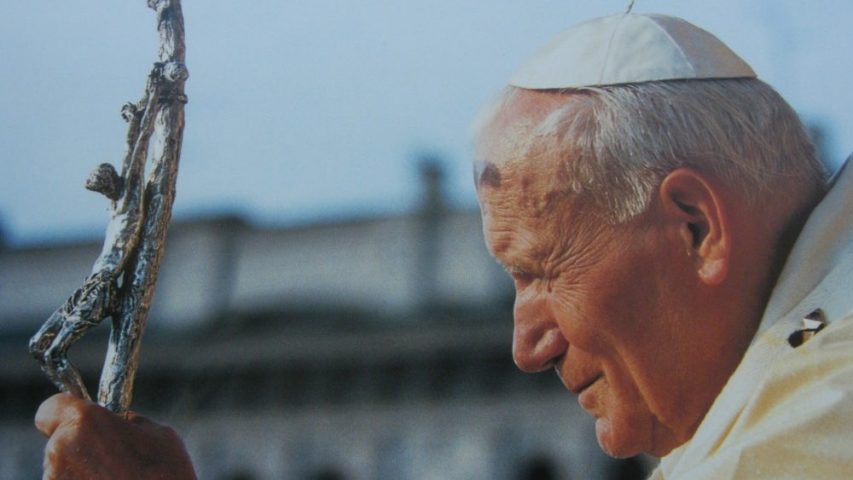
St. Pope John Paul II [Source: Vatican News]
By Richard A. Spinello, The Catholic Thing, June 19, 2026
Richard A. Spinello is a Professor at Boston College and a member of the adjunct faculty at St. John’s Seminary. He is the author of many books and articles on philosophy and ethics including Four Catholic Philosophers: Rejoicing in the Truth (Jacques Maritain, Edith Stein, Dietrich von Hildebrand, Karol Wojtyła).
 There are many crises in the Catholic Church today, but one of the most serious is the dismal state of moral theology. That crisis has its roots in the confusion and intellectual ferment that ensued in the aftermath of Vatican II. Progressive moral theologians proposed questionable moral theories like proportionalism and the “fundamental option,” while prominent scholars like Bernard Häring dissented on vital issues of received moral teaching such as the inadmissibility of contraception and the indissolubility of marriage.
These dissident theologians had differing visions, but one common theme: the Church had no authority to proclaim specific, exceptionless moral norms based on natural law. The best it could do was to teach formal moral principles. Specific moral precepts such as “adultery is always wrong” are highly problematic, in their view, because there may be valid exceptions. A corollary is the autonomy of conscience along with “discernment” in making moral decisions. In place of natural law, they recommended more flexible theories that allow for moral compromise in some situations. …
Related posts

June 19, 2026

June 19, 2026